
The charity sector has long stopped being solely a story about donations and humanitarian aid. The modern world is gradually changing the very approach to social responsibility, community engagement, and support mechanisms.
If help was once more often seen as a reaction to a problem that had already emerged, today more and more projects strive to work with root causes, prevention, and long-term change.
The structure of participation is changing too. People increasingly want not just to send money, but to understand where it goes, what results it produces, and how the situation evolves months or years later.
At the same time, technology, digital platforms, open data, global communication, and the growth of local communities have created an entirely new environment for social initiatives.
Modern philanthropy is becoming more transparent, flexible, international, and at the same time more local.
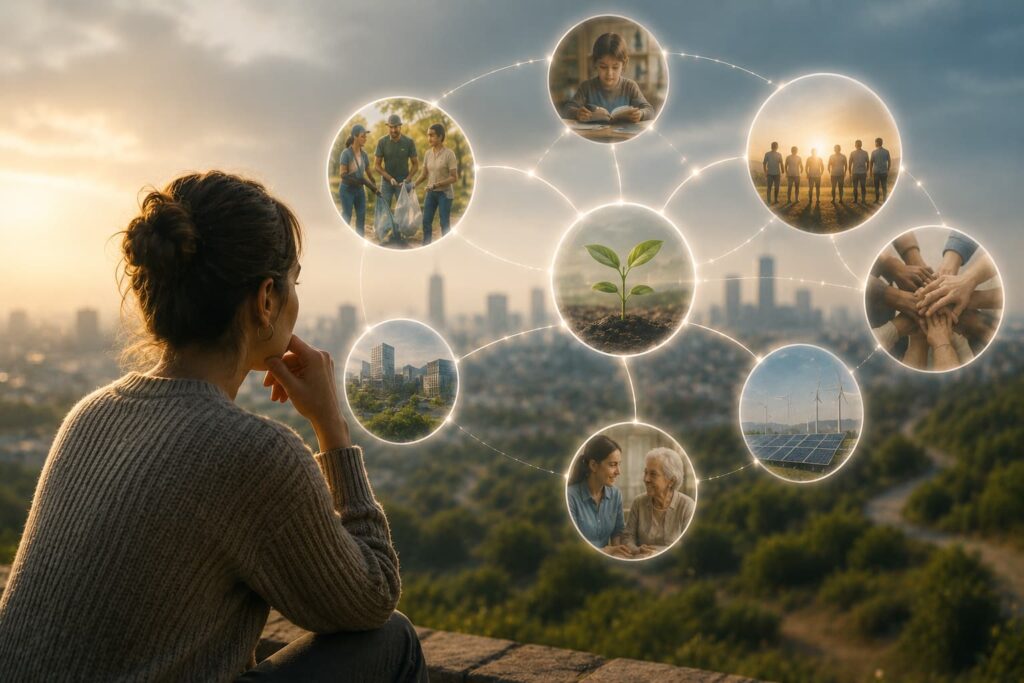
One of the main trends in today’s charity world is the shift from one-off impulses to systemic thinking.
People increasingly ask questions:
- why did the problem arise;
- can its consequences be reduced in advance;
- how to create a sustainable solution;
- what will happen in a few years;
- how does help affect society as a whole.
That is why the social sector is gradually moving not only toward support, but also toward changing the environment around a person.
Today, several major development directions can be seen in the global charity sector.
Growing transparency and open data.
Organizations increasingly publish reports, showcase projects, and share how they operate, who their partners are, and what results they achieve. For many people, being able to see a project’s digital footprint becomes part of building trust.
Development of digital platforms.
Online platforms help people find projects, make donations, take part in volunteering, follow initiatives, and connect people from different countries.
Micro-donations and regular support.
Many countries are developing a culture of small but regular donations, where a large number of people support projects with modest amounts on an ongoing basis.
Corporate social responsibility.
Businesses are increasingly taking part in social processes: supporting environmental initiatives, educational programs, city projects, medical research, inclusion efforts, and employee volunteer programs.
Development of local communities.
Despite globalization, small city and neighborhood initiatives are gaining more importance. People are becoming more active in shaping the space around them: courtyards, schools, parks, cultural spaces, and local communities.
Technology and artificial intelligence.
Modern technologies help analyze data, find resources, coordinate aid, forecast crises, and bring people together around specific tasks more quickly.
Environmental direction.
Ecology is gradually becoming one of the largest global themes: tree planting, nature restoration, ocean cleanup, sustainable development, waste recycling, animal protection, and changes in society’s environmental behavior.
Mental health and social isolation.
Many countries are paying more attention to psychological support, loneliness, emotional burnout, communication crises, and issues of people’s inner well-being.

Modern charity is less and less built around the idea of “saving someone.”
And more and more – around the idea of jointly taking part in creating a society where people find it easier to live, interact, and support one another.
That is why today there coexist:
- international humanitarian missions;
- small city initiatives;
- digital platforms;
- volunteer communities;
- educational projects;
- environmental movements;
- technological solutions;
- cultural programs;
- local associations of people.
It is this diversity that gradually forms the new architecture of the modern world of good.
The future of the charity sector will most likely be tied not to a single global model of aid, but to a huge number of interconnected forms of participation.
Some will continue to support international programs.
Some will change their own neighborhood or city.
Some will create a technology platform.
Some will become volunteers.
Some will help with knowledge, connections, experience, or their profession.
That is why modern charity is increasingly becoming not a separate field “for special people,” but a part of society’s culture.
A culture in which help gradually turns from an exception into a natural part of human interaction.
(c) Charity Guide platform (2026)